
1.1. EXPLORATION OF ISTANBUL’S ICONIC LANDMARKS
In our exploration of Istanbul’s timeless icons, we will traverse through the architectural brilliance of Hagia Sophia, the spiritual sanctuary of the Blue Mosque, the imperial grandeur of Topkapi Palace, and the subterranean marvels of the Underground Cistern. Every location tells a different part of Istanbul’s history and demonstrates a city where the past and present interact to create a timeless whole.
HAGIA SOPHIA: An Architectural Marvel
Hagia Sophia was built as a Christian church in the 6th century (532–537) under the direction of the Byzantine emperor Justinian I. Over the centuries, Hagia Sophia underwent significant religious transitions. After the Ottoman Empire conquered Constantinople in 1453, the cathedral was converted into a mosque by Sultan Mehmed II. It remained a mosque for almost 500 years. In 1935, Hagia Sophia was secularised and transformed into a museum under the leadership of Mustafa Kemal Atatürk, the founder of the Republic of Türkiye. The secularization was part of broader efforts to modernize Türkiye and separate religion from the state.
Hagia Sophia’s architectural and historical significance led to its designation as a UNESCO World Heritage Site in 1985. Its inclusion recognizes its importance in Christian and Islamic traditions and its influence on architectural development. The architecture of Hagia Sophia is a blend of Byzantine and Ottoman styles. The massive dome, an engineering marvel of its time, has inspired countless structures throughout history.
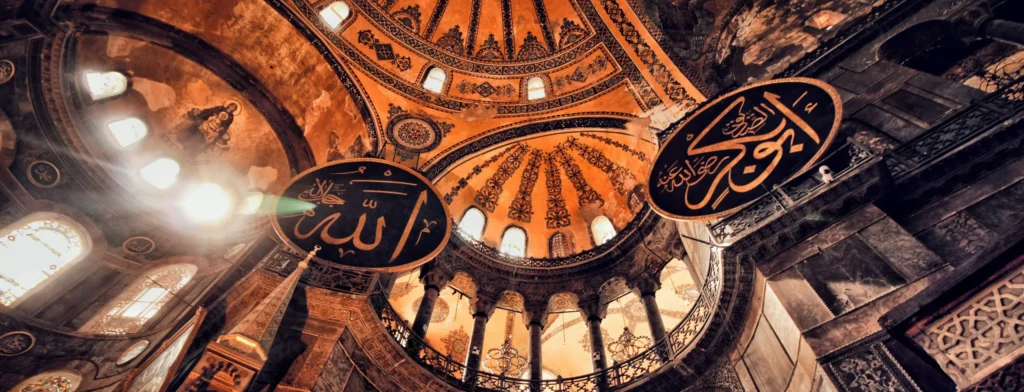
The central dome of Hagia Sophia is one of the largest in the world, spanning 31 meters (102 feet) in diameter. The addition of minarets during its transformation into a mosque altered the exterior silhouette, adding a distinct Ottoman touch to the structure. In July 2020, Hagia Sophia underwent a significant transformation once again. Turkish authorities decided to revert its status to a mosque, allowing regular Islamic prayers. This move sparked debate due to its cultural and historical significance.
Hagia Sophia Visitor Tips: Since January 15, 2024, live guiding inside Hagia Sophia has been restricted to preserve a quiet and respectful atmosphere. Visitors can use the official audio guide by scanning QR codes with their smartphones or you can use headphones.
Current Access Rules: The mosque is open every day, but tourist access is restricted during prayer times.
Dress Code: Modest dress is required. Shoulders and knees should be covered. Women are required to cover their heads before entering. If needed, free headscarves are available at the entrance.
Photography Rules: Photography is generally allowed, but no flash.
Why Visit: Its unique history as a church, mosque and museum over the centuries, its massive dome, Byzantine mosaics and about 1500 years of religious and architectural history make it worth visiting.
Nearby Attractions: The Basilica Cistern, Sultanahmet Square (Hippodrome), Topkapi Palace, Gulhane Park, and the Grand Bazaar. The nearest public transport stop is Sultanahmet Tram Station, just a few minutes walk away.
BLUE MOSQUE: Sultan Ahmed’s Legacy
The Blue Mosque, also known as Sultan Ahmed Mosque, is an iconic and magnificent structure located in the heart of Istanbul, Türkiye. The Blue Mosque was constructed between 1609-1616 by Sultan Ahmed I. The mosque is called ‘Blue Mosque’ because of its famous adornment of thousands of blue tiles. These tiles feature intricate floral patterns, creating a stunning visual effect. Blue is a dominant theme throughout the interior, adding to the mosque’s unique charm. The Blue Mosque is known for its six minarets, an unusual feature when it was built. The Great Mosque of Mecca was the only other mosque with six minarets. Although controversy surrounded the choice of six minarets, it highlighted the mosque’s grandeur.
The Blue Mosque’s interior is just as remarkable. A huge dome rises to a height of 43 metres (141 feet) over the main prayer hall. Beautiful Iznik tiles with calligraphy and elaborate floral patterns cover the interior walls. The calligraphy is particularly noteworthy, displaying verses from the Quran and the names of the caliphs. Its harmonious blend of blue tiles, majestic domes, and impressive minarets make it a must-visit destination for anyone exploring the vibrant city of Istanbul.
Blue Mosque Visitor Tips: Wear comfortable shoes, expect crowds, and set aside at least 30 minutes for your visit.
Current Access Rules: The Blue Mosque is open daily, but tourist visits are restricted during the daily prayer times. Check prayer times before you go.
Dress Code: Modest clothing is required. Shoulders and knees must be covered. Women need to cover their heads before entering. Free headscarves are available at the entrance if needed.
Photography Rules: Photography is allowed, but no flash.
Why Visit: Famous for its six minarets, grand central dome, and over 20,000 hand-painted İznik tiles and as an active 17th-century mosque, it reflects Istanbul’s layered religious and architectural history.
Nearby Attractions: Hagia Sophia, Topkapi Palace, Basilica Cistern, Gülhane Park, Istanbul Archaeological Museums, and Sultanahmet Square. The nearest public transport stop is Sultanahmet Tram Station.
TOPKAPI PALACE: An Imperial Ottoman Residence
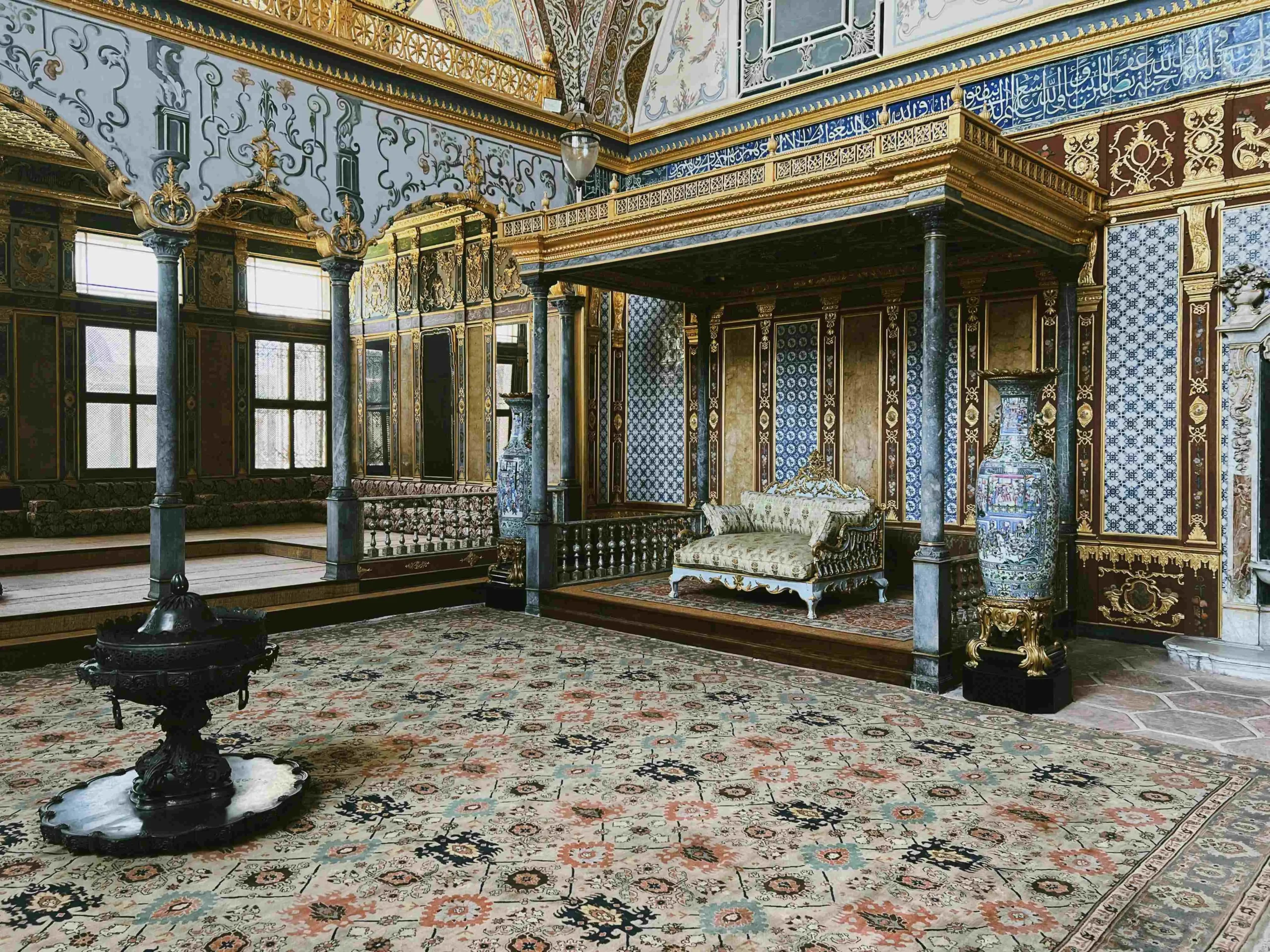
Construction of Topkapı Palace began in 1460, after the Ottoman conquest of Constantinople under Sultan Mehmed II. Originally built as a residence for the Ottoman rulers, it evolved into the administrative and ceremonial center of the Ottoman Empire.
Topkapı Palace is designed as a series of interconnected courtyards, pavilions, and chambers. The palace complex is a vast architectural marvel with a fusion of Ottoman, Persian, and Islamic architectural styles. Over the centuries, successive sultans expanded and renovated the palace, resulting in diverse structures and courtyards. The arrangement of the private quarters for the sultan, administrative buildings, and official ceremony spaces mirrors the hierarchical structure of the Ottoman court.
In 1924, following the establishment of the Republic of Türkiye, Topkapı Palace was transformed into a museum showcasing the rich history and cultural heritage of the Ottoman Empire. It became one of Istanbul’s most visited cultural sites. The museum houses an extensive collection of artifacts, including imperial costumes, weapons, manuscripts, and Islamic art. Visitors can explore the kitchens, the Imperial Council Chamber, and the various pavilions that once echoed with the footsteps of Ottoman rulers. In 1985, Topkapı Palace was designated as a UNESCO World Heritage Site, recognizing its cultural and historical significance. Today, Topkapı Palace is a significant tourist attraction, drawing visitors worldwide to immerse themselves in the abundant history of the Ottoman sultans. Its breathtaking architecture, rich collections, and panoramic views make it a must-visit destination in Istanbul.
Topkapi Palace Visitor Tips: Plan to spend at least 1 to 2 hours exploring the palace. Wear comfortable shoes, as the complex is extensive and includes several courtyards and gardens. Arriving early in the morning is recommended to avoid long ticket lines and the busiest crowds.
Current Access Rules: Topkapi Palace is closed on Tuesdays. Opening hours (09:00 am – 05:00 pm) can vary on public holidays. So check before your visit. An admission ticket is required. The Harem section and Hagia Irene require separate tickets. A combined ticket is also available, which allows visitors to explore Topkapi Palace, the Harem and Hagia Irene. Hagia Irene is located within the first courtyard of the Topkapi Palace complex.
Dress Code: There is no strict dress code, but comfortable clothing and walking shoes are recommended because the complex is large and includes courtyards.
Photography Rules: Photography is allowed in most outdoor areas, but not in certain exhibition halls or the Treasury.
Why Visit: It served as the residence and administrative center of the Ottoman sultans for nearly 400 years. It’s famous for its courtyards, the Harem, the Imperial Treasury, sacred relics, and views of the Bosphorus. Palace offers the chance to see Ottoman treasures, including the Spoonmaker’s Diamond.
Nearby Attractions: Gulhane Park, the Istanbul Archaeological Museums, the Basilica Cistern, Sultanahmet Square and the Blue Mosque are all within walking distance. The nearest public transport stops are Gulhane Tram Station and Sultanahmet Tram Station, both just a few minutes away.
UNDERGROUND CISTERN: A Subterranean Marvel
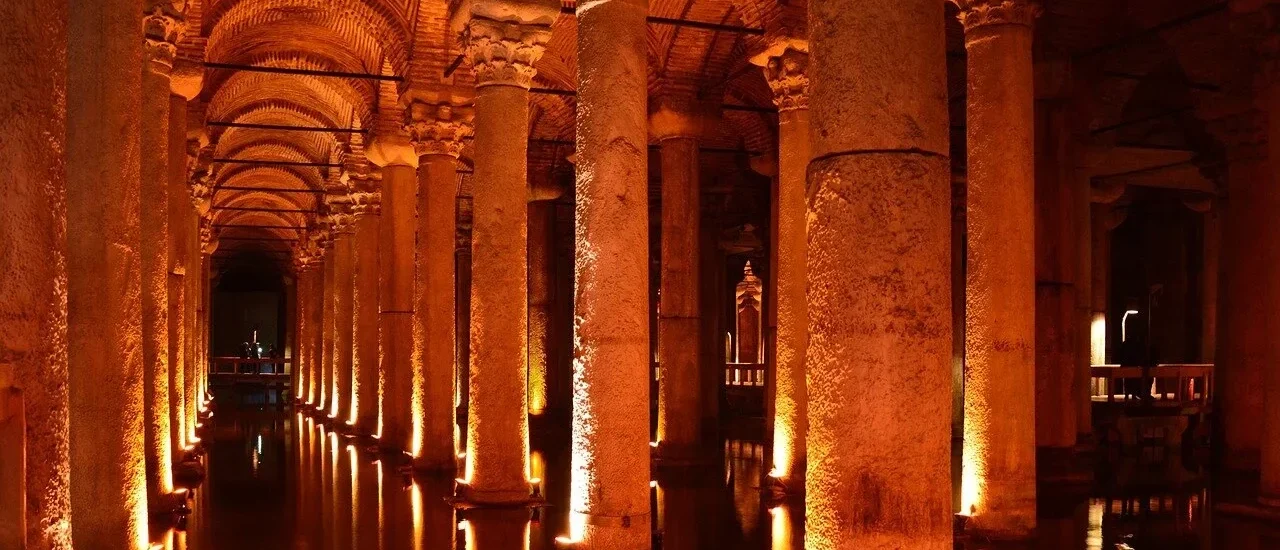
The Basilica Cistern, known as the Yerebatan Sarnıcı in Turkish, is a remarkable underground structure in Istanbul, Türkiye. Built in the sixth century under the rule of Justinian I, the Byzantine Emperor, this subterranean cistern served as a water storage and supply system for the Great Palace. With its enormous 80,000 cubic meter water storage capacity, the cistern maintained the city’s water supply during the Byzantine era.
The cistern’s most iconic feature is its forest of columns. These columns were repurposed from ancient structures, giving the cistern a unique and eclectic aesthetic. Two columns feature the head of Medusa, positioned upside down or sideways, adding an intriguing and mysterious touch. One is positioned sideways, while the other is upside down. The origin of these heads is unclear, adding an element of mystery to the cistern. The Basilica Cistern is a functional marvel of ancient engineering and a fascinating location that immerses visitors in a unique blend of history and aesthetics.
Basilica Cistern Visitor Tips: Plan for about 30 to 45 minutes. Arrive early or later in the afternoon to avoid the busiest crowds.
Current Access Rules: The Basilica Cistern is open daily (09:00 am -10:00 pm / last admission is at 6.30 pm). Opening hours may vary on public holidays, so check ahead before your visit. An entrance ticket is required, and you can buy tickets at the entrance or online in advance to skip the queues.
Photography Rules: Photography is allowed for personal use, but flash photography and tripods are not permitted.
Why Visit: Built in the 6th century during the reign of Emperor Justinian I, the Basilica Cistern is one of Istanbul’s most atmospheric and unique attractions, featuring 336 marble columns and the famous Medusa head bases.
Nearby Attractions: Hagia Sophia, the Blue Mosque, Sultanahmet Square, Topkapi Palace, and Gülhane Park. The nearest public transport stop is Sultanahmet Tram Station, just a few minutes’ walk away.
1.2. TIPS FOR EXPLORING THE HISTORIC BAZAARS
GRAND BAZAAR: A Shopper’s Paradise – How to shop at the Grand Bazaar!
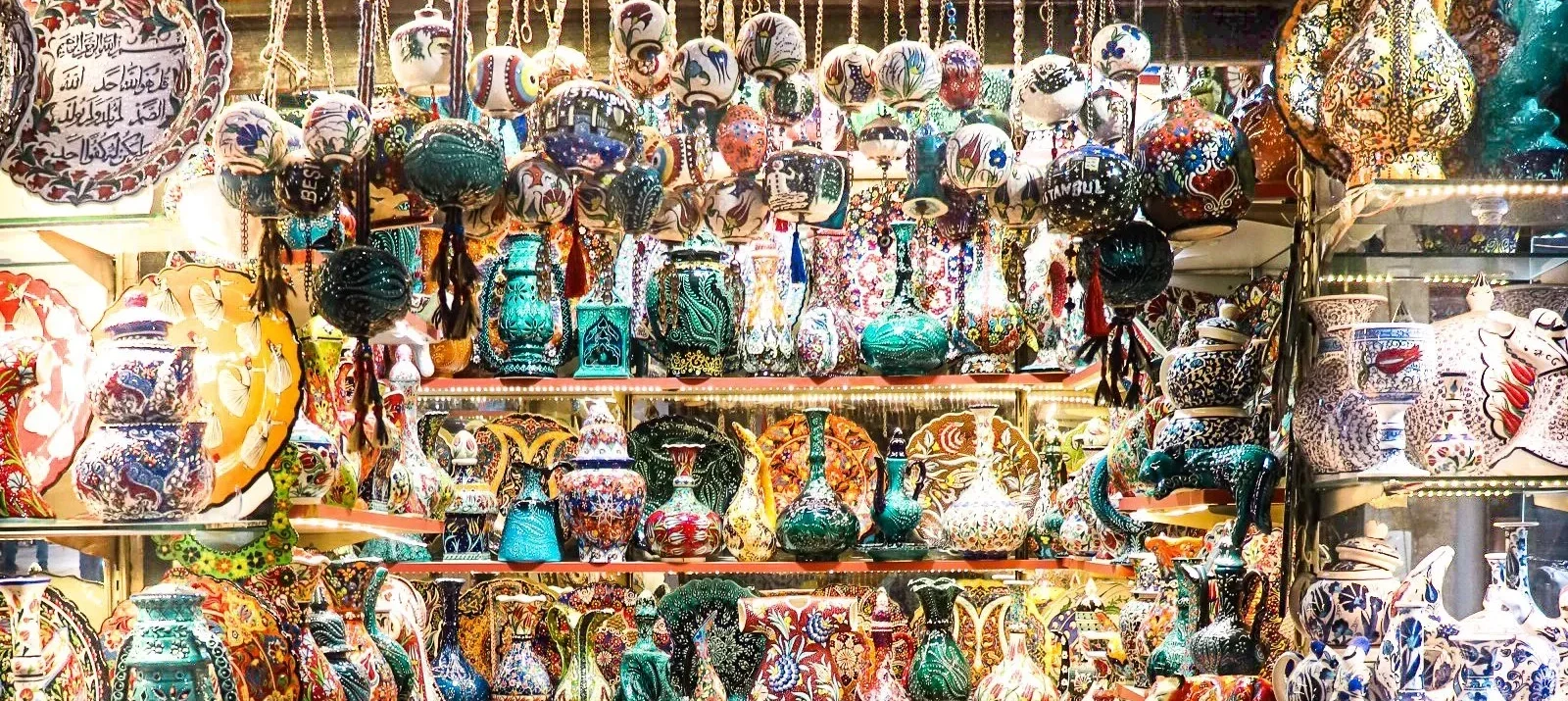
Nestled in the heart of Istanbul, the Grand Bazaar is a living testament to the city’s rich history, vibrant culture, and bustling commerce. This famous bazaar, which covers an area of more than 30 hectares and is embellished with a complex system of covered streets and alleys, has served as a hub for trade and social interaction for centuries. The Grand Bazaar’s roots trace back to the 15th century, during the reign of Mehmed the Conqueror. What began as a small market near the Grand Mosque evolved into an expansive complex, reflecting the economic and cultural dynamism of the Ottoman Empire. Over the years, successive sultans contributed to its growth, resulting in today’s diverse and sprawling marketplace.
Wandering through the Grand Bazaar is a sensory delight. The architecture blends Ottoman and Byzantine styles with vaulted ceilings, domes, and labyrinthine passages, creating an enchanting atmosphere. Thousands of shops, stalls, and boutiques beckon with various goods.
Handwoven carpets, intricately designed ceramics, gleaming jewellery, and vibrant textiles fill the stalls, enticing visitors with the craftsmanship and artistry of Turkish artisans. Rugs, carpets and kilims could transform your living room into a palace fit for a sultan. You will be amazed by exquisite leather goods and jewellery made of gold and silver. All the spices you can think of are available at Grand Bazaar. It is impossible to visit Türkiye without tasting some Turkish delight. Don’t hesitate to ask for a sample regarding spices or Turkish delight.
The Grand Bazaar is a maze, and that’s the fun of it. Take a wrong turn, discover hidden gems and let the market surprise you. Take a moment to appreciate the Turkish hospitality in the middle of the shopping madness. Traditional Turkish tea is available in many stores, encouraging customers to sit, unwind, and converse. It’s more than just a marketplace—a social gathering place where people gather over steaming cups of tea to exchange stories and build relationships.
Grand Bazaar Visitor Tips: Plan for 1 to 2 hours exploring, visit in the morning to avoid the biggest crowds, and bargaining is a common part of the shopping experience.
Current Access Rules: Grand Bazaar is open Monday to Saturday (08:30 am – 19:00 pm), closed on Sundays. Hours may vary on public or religious holidays. Entry is free of charge.
Why Visit: Dating back to the 15th century, the Grand Bazaar is one of the world’s oldest and largest covered markets, with more than 4,000 shops. It’s a great place to experience Istanbul’s atmosphere while browsing carpets, ceramics, jewellery, leather goods, spices…
Nearby Attractions: Spice Market, Suleymaniye Mosque, Beyazit Square, Nuruosmaniye Mosque, and Column of Constantine are all within walking distance. The nearest public transport stops are Beyazit-Kapalicarsi Tram Station and Cemberlitas Tram Station.
WHAT TO BUY AT THE SPICE BAZAAR IN ISTANBUL : A Complete Shopping Guide
Nestled in the historic Eminönü quarter of Istanbul, the Spice Market, or “Mısır Çarşısı” in Turkish, beckons visitors with a journey through an aromatic world of spices, teas, and exotic flavours. This vibrant marketplace, dating back to the 17th century, stands as a testament to Istanbul’s rich cultural tapestry and its role as a crossroads of East and West.
The Spice Market was established during the rule of Mehmed the Conqueror in the 17th century. Its strategic location near the New Mosque and the Egyptian Bazaar Gate facilitated the trade of spices, herbs, and medicinal plants arriving from Asia, Africa, and the Middle East. Over the centuries, it has retained its authentic charm while becoming a must-visit destination for locals and tourists. The market’s architecture is a visual feast. Covered domes and arched corridors house many shops, each adorned with colourful displays of spices, dried fruits, nuts, and sweets. The symmetrical layout and intricate designs reflect Ottoman and Byzantine influences, creating an atmosphere of timeless elegance.
As you step into the Spice Market, the air becomes infused with the heady aroma of exotic spices. Stalls and shops overflow with pyramids of saffron, cumin, sumac, and countless other spices, creating a visual and olfactory spectacle. Teas of various blends, dried fruits, and Turkish delights showcase the market’s diverse offerings. You cannot explore the Spice Market without indulging in its sweet delights. Turkish delight, or “lokum,” comes in various flavours and colours, often infused with rosewater, citrus, or nuts. Baklava, another Turkish culinary treasure, tempts visitors with layers of flaky pastry, honey, and nuts.
Take a moment to stop at one of the tea stalls in the Spice Market. The aroma of freshly brewed Turkish tea fills the air. Enjoy a cup of traditional tea served in tulip-shaped glasses. Try Turkish delight with your tea, and enjoy this taste while breathing in the market’s lively atmosphere. Explore the culinary treasures in Spice Market’s nooks and crannies. Engage with the merchants to learn about the origins and uses of the spices, gaining insights into the culinary traditions that have shaped Turkish cuisine. Try products before you buy, and think about picking up tiny amounts of different spices to build your unique spice collection.
Spice Market Visitor Tips: Plan for 30 to 45 minutes. Visit in the morning to avoid the biggest crowds, compare prices between shops, and don’t be shy about light bargaining, especially for souvenirs.
Current Access Rules: The Spice Market is open daily (08:00 am – 07:30 pm), but hours can vary on public holidays and religious days, so check ahead. Entry is free of charge.
Why Visit: Built in the 17th century, it’s one of Istanbul’s oldest and most colourful bazaars, famous for spices, Turkish delight, teas, dried fruits, and souvenirs.
Nearby Attractions: New Mosque, Galata Bridge, Eminönü Square, the Bosphorus ferry terminals, and the Grand Bazaar. The nearest transit stop is Eminönü Tram Station, a few minutes’ walk away.
2. PRACTICAL TIPS FOR NAVIGATING ISTANBUL
2.1. Transportation Options
Istanbul Card: A rechargeable travel card accepted on almost all public transportation (bus, tram, ferry and metro) offering the most convenient and cost-effective way to get around the city. This card minimizes the hassle of purchasing separate tickets for each journey.
Metro and Tram: Istanbul’s metro and tram systems are efficient and connect critical points across the city. To make the most of these options, especially when navigating between famous landmarks, become familiar with the routes.
Bus: Covers almost every district in Istanbul.
Marmaray: An underwater rail line connecting Europe and Asia.
Taxi: Widely available, but traffic can be heavy during peak hours.
Ferries: Enjoy the unique experience of taking a ferry across the Bosphorus. Not only is it a scenic journey, but it also offers an alternative mode of transportation, connecting the European and Asian sides of the city.
2.2. Best Time to Visit Istanbul
Istanbul is a year-round destination, but the ideal time depends on what you’re looking for. Spring (April to May) is often considered the best overall, with mild temperatures and beautiful tulips in bloom, perfect for sightseeing around landmarks like Hagia Sophia and Topkapi Palace. Autumn (September to October) is also excellent, warm, but not too hot and with fewer crowds, great for walking tours and photography. Summer (June to August) is lively and great for rooftop dinners or Bosphorus cruises, but can be crowded and quite hot. Winter (November to March) offers a peaceful atmosphere, fewer crowds and better hotel rates. Although the weather can be cool and rainy, it’s an excellent time to explore Istanbul without the peak-season crowds. For first-time visitors, April, May, September and October offer the best weather and sightseeing conditions.